
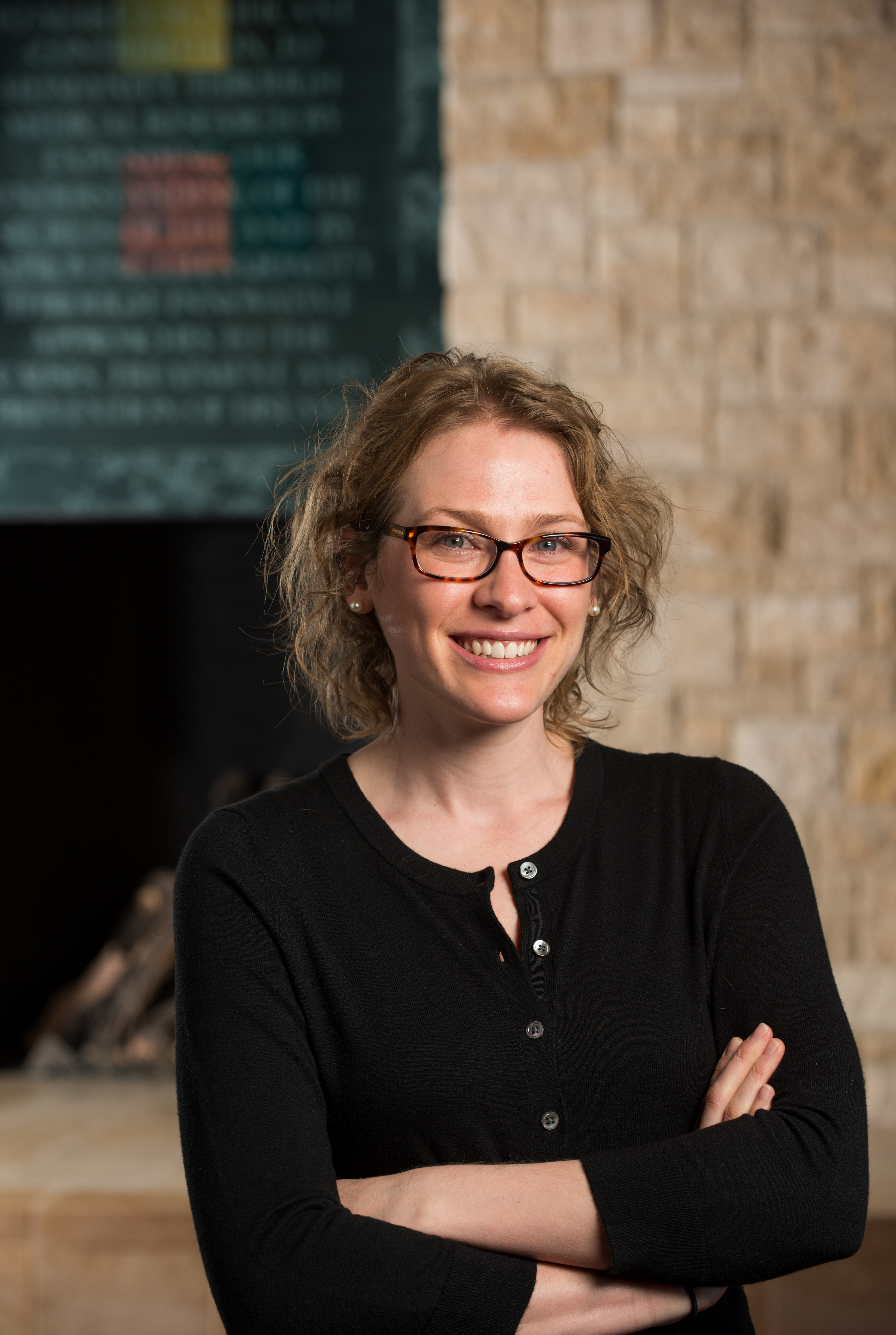
SaraH Zanders fell in love with genetics as an undergrad at the University of Iowa, after taking her first genetics course. She spent many happy hours in the lab, digging into the genome of budding yeast. Today, her continued fascination with what’s passed on from one generation to the next drives her lab’s research on genetic parasites, and how they cause infertility.
After graduating with a B.S. in biology, Zanders completed her Ph.D. at Cornell University in Ithaca, New York, and a postdoctoral fellowship at the Fred Hutchison Cancer Research Center in Seattle, Washington. Along the way, she became intrigued by parasitic genes and their role in the evolution of genomes. Zanders has made significant contributions to the field including the discovery of meiotic drivers in fission yeast. She set up her lab in 2016 at the Stowers Institute.
Apart from research, educating the next generation of scientists is a top priority, crediting her mentors for teaching her how to think critically, communicate, and conduct research. In July 2019, Zanders became the first person to fill the role of Vice Dean of the Graduate School of the Stowers Institute. As a mentor and a teacher, she strives to prepare students to conduct innovative and creative investigations of their own.
Abstract
Killer meiotic drivers are selfish genetic elements that promote their own transmission into the next generation by killing the gametes that do not inherit them from a heterozygote. Killer meiotic drivers have independently evolved many times and are found throughout eukaryotes. Despite generally being unrelated, killer meiotic drivers found in distinct lineages often share mechanistic and evolutionary themes. Fission yeasts offer a particularly tractable system for identifying and characterizing these themes. My talk will introduce the wtf killer meiotic drivers found in fission yeasts, their mechanisms and features that may facilitate their striking evolutionary longevity.